
Find Who Owns Rusk County Property
The clearest route runs address to roll to deed. Rusk County's public tax-parcel result carries an Owner Name field and a separate legal-description field. The county's Real Property Lister maintains current ownership for the assessment and tax rolls. No refresh schedule is published. That gap matters after a closing. The roll may still show the prior owner of record, while the newest deed gives the transfer date and the named grantee.
- Search the address or a known name in the Rusk County Web Portal and note Owner Name, Address, Property Address, Parcel ID, and Legal.
- Open the parcel on Beacon and make sure the legal description and map location fit the same land.
- Use Tapestry or another county-linked recorder entry point to find the newest conveyance and compare its grantee and land description.
- If the grantee is an LLC, trust, or estate, use Wisconsin entity or probate sources to understand the record name without assuming that an agent or representative owns it.
A street address is only a lead. So is a tax roll name; treat either as an answer only when the parcel and legal description line up too.
Where Rusk County Ownership Appears
Ownership shows up in several Rusk County records, each current for its own purpose. The tax roll gives the county Owner Name field. A deed identifies the parties in a recorded conveyance, and the GIS viewer links the described land to a map, while an entity or probate file explains a name that is not an individual.
| Where ownership appears | What it gives | How current |
|---|---|---|
| Tax roll | Owner Name, address labels, Parcel ID, legal description, and tax fields. | Update schedule is not published by the county. |
| Register of Deeds | Grantor and grantee named in recorded transfers and other instruments. | Use the newest recorded conveyance; online cutoff is not stated. |
| Beacon map | Parcel location and map-linked property data. | Exact refresh timing and field inventory were not verified. |
| DFI or probate records | Entity identity or estate case context where relevant. | Check the agency or court source for current status and access limits. |
An owner of record is simply the name on the assessor's roll or deed. It says nothing about who occupies the building. Mailing and situs addresses differ too. Rusk County's portal labels them separately as Address and Property Address, and Land Information keeps the assigned site addresses. Tax mail can go elsewhere entirely. A familiar Ladysmith mailing label can still sit on land taxed in another municipal district.
Rusk County Owner Name Field
The exact public roll label is Owner Name. The Real Property Lister maintains current ownership of all county property and prints the assessment and tax rolls. The public Catalis result also lists an Owner ID, which helps when the same name appears on more than one parcel. Refresh frequency after a closing is not stated anywhere.
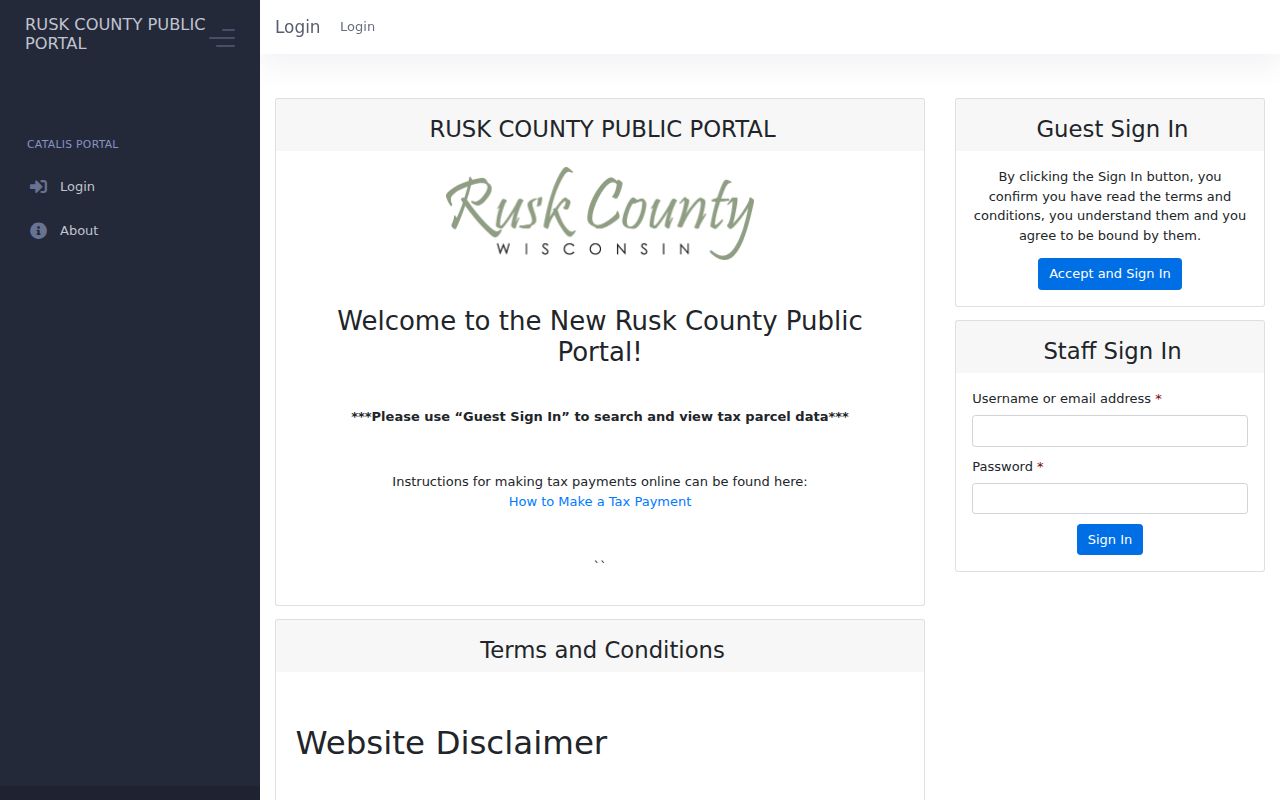
The login page displays only the guest-entry screen for the portal. No owner card or sample parcel appears there. No update timestamp appears either, so the live result stands as the only current source.
The county's Catalis tax-parcel portal is the search route.
Save the parcel ID first. Do the same with the legal description before treating the owner field as a match.
Rusk County LLC and Estate Owners
The tax roll may name an LLC, corporation, trust, or estate rather than a person, and that is not an error. Wisconsin DFI's corporate-record search can confirm the entity's legal name, status, registered agent, and principal or registered-office address. Those fields explain the business record. A registered agent is not an owner, so match the entity name against the deed's grantee and the parcel's legal description.
A death transfer can take several forms. Look for a personal-representative deed, TOD instrument, HT-110 termination, beneficiary designation, or court order. Rusk County's Register in Probate handles probate files, informal proceedings, wills filed for safekeeping, trusts, guardianships, conservatorships, and protective placements. Confidential and juvenile files have access limits. The office cannot give legal advice to a personal representative either.
The Register in Probate page covers duties and access. It is an access resource, not a case file.
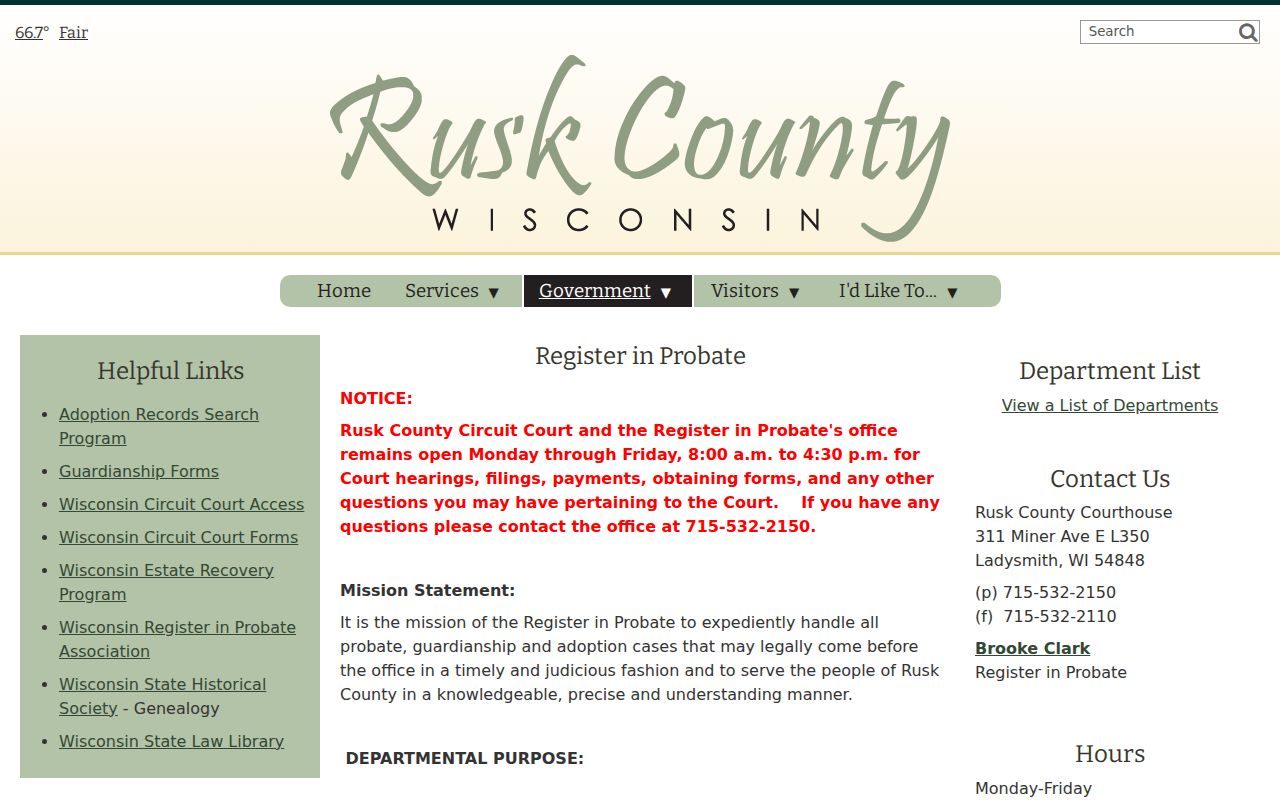
Call the office first and ask which estate papers are public before you file a request, since some Rusk County estate records stay confidential.
Rusk County Mailing and Situs Fields
Treat the portal's two address labels as separate clues. Address and Property Address both appear in the Catalis result inventory. The portal does not spell out their full definitions. The county also assigns a site address or fire number. Tax mail can go elsewhere. A post-office city name alone settles nothing about the municipality or tax district for the land.
When naming an owner, compare the parcel's legal description and municipality alongside the name. Rural or edge-of-city parcels need extra care. Land Information clarifies site-address records. The local clerk can direct permit and municipal-file questions. Never use a mailing address to infer where someone lives.
Rusk County's Newest Owner Deed
Once the tax roll gives you an owner name, the next step is the newest deed. That deed sits in the Register of Deeds index. Rusk County links Tapestry, RODdirect, and Laredo for searching. Each vendor offers grantor and grantee fields. Coverage of older records varies by service. Confirm the starting date with the Register's office before relying on any single portal.
Read the instrument itself, not just the index line. Note the parties and the legal description. A partial conveyance can make ownership less direct than a simple buyer-seller deed. So can a land contract, an estate filing, or a parcel number change. The deed date and the recording date can serve different purposes, so keep both when the record shows them. If an online result leaves the match unclear, ask the Register for a copy or the relevant book and page.
Before calling an instrument a change in ownership, check what interest it actually describes. A deed may cover only part of a larger tract. It may identify land through a subdivision lot, or through metes and bounds that look nothing like a street address. Compare the grantor, grantee, recording reference, and full legal description. If the parcel was split or combined, the current tax roll may carry a different parcel number than the older deed. The recorded plat or survey map can bridge the two land descriptions.
A single name can appear in several roles. Do not treat the tax owner, an entity officer, a registered agent, a personal representative, and a deed grantee as interchangeable. Each source answers a different question. Wisconsin DFI can identify an entity's registered office or agent. The county deed identifies the parties to a land instrument. A probate file may explain authority for an estate transfer, subject to its own access rules. Match every name back to the same legal description before concluding the records describe one parcel.
A Rusk County property owner name earns real weight. The roll, the deed, and the map all point to the same land when it does. The deed records section explains copy and recording details.
Rusk County Owner Filing Alerts
The Register of Deeds links a free Property Fraud Alert service for filings tied to a monitored property. An alert is a prompt, not a verdict. It cannot decide whether an instrument is valid. Compare the document number and the parties, then ask the Register about any filing that appears unauthorized.
Use the county's own contact page to check unsolicited payment demands, deed-copy offers, or any portal flashing a government seal. Preserve the notice or document reference. A property owner should then contact the custodian directly. Public ownership information is never permission to expose a protected address or to harass anyone.
Limits on Rusk County Owner Searches
A public record names a person or entity in a specific role. That is all it does. It does not show who occupies the property, who may enter, or whether a title is clear of claims. A tax card is not a title search. An LLC's registered agent is not automatically its landowner. Wisconsin's public-record presumption still yields to confidentiality rules and the required balancing test.
The Wisconsin DOJ Safe at Home program shields addresses for eligible participants. County portal terms also warn that information may be incomplete or inaccurate, and they restrict copying and redistribution. Work through a custodian to correct an error. Collect as few personal details as the task requires.
Lawful use. Use an owner lookup for property due diligence, estate research, or civic questions. Do not use an address or owner name to stalk, harass, expose, or harm a person.