
Trace Former Rusk County Property Owners
Start with the newest matching deed. Every grantor was a grantee once. Find that earlier instrument, then repeat the step. Continue until the chain reaches the earliest recorded transfer of the land. The online vendor index states no first year or image cutoff. So ask before assuming coverage. For older deed books, grantor-grantee indexes, and microfilm, the Register of Deeds is the first stop. The Wisconsin Historical Society's 1915 atlas adds landscape context, though it proves nothing about title.
| Source | Verified date reach | Where to follow up | Use in a former-owner chain |
|---|---|---|---|
| Tapestry / RODdirect | Start year and image cutoff not stated | County Register of Deeds links | Search the parties and compare the land description. |
| Deed books, indexes, microfilm | Exact Rusk date ranges not located | Register of Deeds | Ask which index or book follows the online range. |
| 1915 Rusk plat atlas | 1915 edition, 53 pages | Wisconsin Historical Society | Place a legal description in its township, village, road, and settlement context. |
| Probate records | Case coverage varies; exact chain coverage not stated | Register in Probate | Explain an estate transfer that appears between deeds. |
Modern transfers show up in the online index. That is the easiest starting point. For an earlier owner of record, ask the Register about the grantor-grantee book or the microfilm path. The 1915 atlas works best as a bridge between old land descriptions and recognizable roads or settlements, never as a deed substitute.
Walk the Rusk County Deed Chain Backward
Each prior-owner step needs a matching deed. No instrument, no link. The chain records transfers, not occupancy. Someone could have farmed or rented the land for years without ever holding title. The recorder documents no fixed set of online search fields, so confirm the live options instead of guessing at a document-type filter.
- Identify the most recent deed for the parcel and note its grantee and legal description.
- Read the grantor who conveyed that interest and the document reference.
- Search the earlier grantee under that grantor's name and compare the legal description again.
- Continue while the land and parties match; ask the Register for the next index or book when online results stop.
- Grantor
- The person or entity that conveyed the interest.
- Grantee
- The person or entity that received the interest.
- Chain of title
- The ordered set of instruments through which interests in land passed.
- Legal description
- The written land description used to distinguish this parcel from another.
How Far Rusk County Ownership Reached
Rusk County's online recorder index publishes no stated start year. The earliest deed book, the microfilm dates, and any imaging cutover go unlisted as well. Ask the Register of Deeds directly. That office holds the grantor-grantee indexes, deed books, tract indexes, and certificate-of-title materials, plus transfer-on-death filings, plat books, certified survey maps, and older mortgages. Depth varies by era. A conversation with the custodian settles it faster than any vendor screen.
No courthouse fire or flood loss touches Rusk deed books. That silence is not proof of an unbroken record. Wisconsin Historical Society holdings, county historical collections, and the Register's own indexes can explain a missing year or a name variant that stalls the search.
Lawful use. Former-owner research can support property history, title work, estate questions, or purchase diligence. It is not a tool to track, expose, harass, or harm a living person.
Rusk County Older Indexes and Maps
Older Rusk County instruments speak their own language. Expect township, range, and section calls, lot and block, metes-and-bounds, abstract names, or a subdivision description. Modern parcel IDs may not appear in older books. Carry the legal description, the owner's spelling, and any book or instrument reference when asking for the next volume.
The county's map collection includes a 2013 section guide and original government field notes. Wisconsin Historical Society holdings cover maps tied to Rusk County and to the former Gates County name. That naming history matters in archival catalogs. It never changes the legal identity of a parcel.
Use the map for geographic context. Then return to the deed index for an instrument that actually conveyed an interest.
Rusk County's 1915 Ownership Atlas
Rusk County's 1915 Plat Book is a gem. Its township and range sheets name roads, railroads, schoolhouses, settlers' houses, villages, and communities. Rusk County Abstract Company and Foust & Jungblut created it, with publication in Ladysmith and Milwaukee. The atlas shines when an old legal description carries no modern street address.
The Wisconsin Historical Society digitized atlas offers page thumbnails. Match a township, range, or plat clue first. Then set the sheet beside a current parcel map. A named landowner is historical context, never proof of a later transfer.
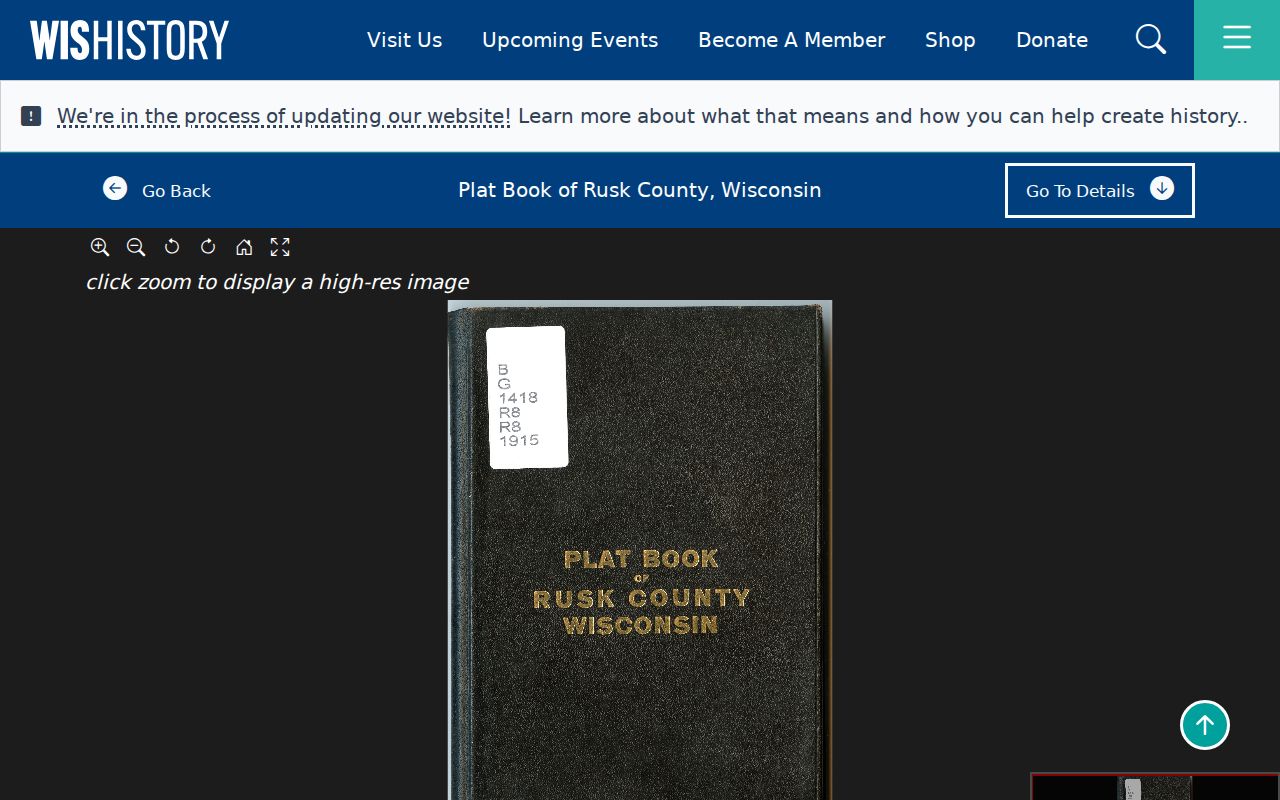
Let the atlas place the land; the deeds prove it.
Rusk County Parcel Number Changes
Chains get messy when a parcel is split, combined, or renumbered. Rusk County publishes no parcel renumbering history or online change table. Compare legal descriptions, lot or section references, acreage, and recorded plats at every transfer instead. One parcel number rarely spans every deed.
When an address search stops matching, use the land description. It is printed on the deed or tax statement. GIS can also reveal it, the county says. A subdivision plat or certified survey map can help here. It can show how a later lot came from a larger tract. The earlier deed still describes the original land interest. Read them together.
Rusk County Probate Chain Breaks
Death can break a clean buyer-to-seller chain. The prior owner of record may have died before the parcel changed hands. The next deed in Rusk County property records may then name a personal representative instead. It could also name a beneficiary or court order. Rusk County lists probate, TOD, HT-110 termination, and related transfer records among its resources. Probate files are not always open online. Wills and trusts often stay confidential.
Start with the deed reference. Public case information can then identify the relevant probate file. The Register in Probate explains access procedure but cannot give legal advice. So include the parcel's legal description in both requests. Avoid matching a similar estate name to the wrong transfer.
Request Older Rusk County Deeds
Online indexes run out at some point. Ask the Register of Deeds what covers your date. That answer may be an older index, a deed book, a tract record, or microfilm. Give the office the grantor and grantee spelling, the legal description, an approximate date range, and any instrument or page reference already found. Rusk County publishes no confirmed online start year. Request the next source, not a guessed cutoff year.
The Rusk County Register of Deeds is at 311 Miner Avenue East, Suite 132N, Ladysmith, telephone 715-532-2139. Counter hours run Monday through Thursday, 8 a.m. to 4:30 p.m. Friday hours are 8 a.m. to 12:30 p.m. County holidays are closed. Check the official office page before traveling, especially if staff help matters. Staff can assist with a historical index or book. A request with both the tract description and a date range routes faster than a former owner's name alone.
Recording fees apply to new documents only. They do not price a search or a copy. Rusk County lists $30 per document, with a page-based fee schedule for recorded instruments. Ask which copy, certification, or retrieval charge applies. Do not assume the recording fee covers a search. Keep every book, page, or instrument reference with each link in the ownership chain.
The deed chain is not the only archival route. The Wisconsin Historical Society and the UW-Madison catalog identify the 1915 Rusk atlas. Local collections and newspapers may add place context. For modern deed records, the Fidlar Tapestry entry page is one county-linked route into the index.
Online deed records in Rusk County run out at some point. When your parcel trace hits that edge, ask the Register of Deeds which older deed books or indexes hold the records you need.